Big engineering projects rarely fail because the math was wrong. They fail because someone forgot to tell the crew the delivery moved to Tuesday. Bridges, factory retrofits, even a kitchen remodel- the physics is usually the easy part now.
Coordination is the hard part. That’s why the software running underneath modern projects matters almost as much as the blueprints on top. Here’s what’s actually changing.
Coordination Software Reaches Every Trade
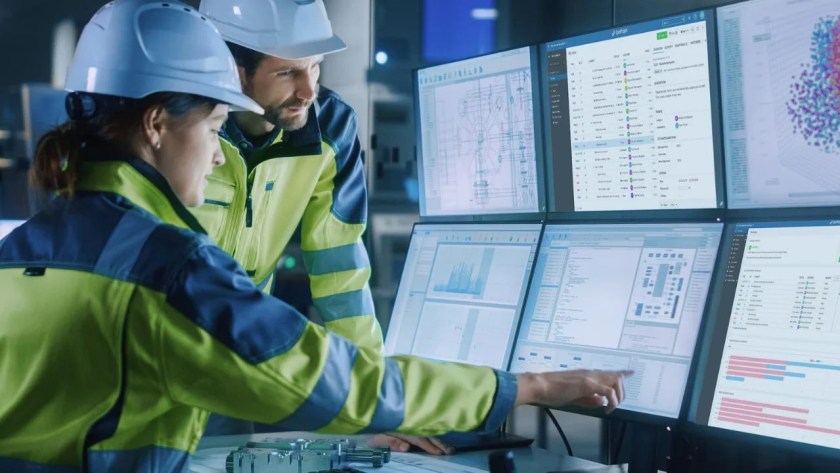
A decade ago, “project software” basically meant a Gantt chart and hoping nothing went wrong. That’s changed. Even the narrowest trades now run on platforms built specifically for them.
Flooring contractors are a good example it looks like a simple business from the outside, but it involves room-by-room measuring, material orders that have to match exactly, install schedules stretching across several days, and photos of every job in case a customer disputes the work later.
MrTask makes flooring software that handles exactly that. A phone call becomes a scheduled job, gets assigned to a crew, and ends as a finished invoice. No juggling five spreadsheets to get there.
Small example, sure. But it says something about where the whole industry is headed: generic tools that try to serve every trade the same way are losing ground. The specific ones are winning, and honestly, that makes sense. Why would a plumber and a flooring crew need the same software when their jobs barely look alike?
The same story plays out across engineering work, just at a bigger scale.
Where Big Iron Meets Software
Civil and mechanical engineers have leaned on CAD for decades; nothing new there. What’s shifted is how much coordination work has moved from email threads to shared digital models.
Autodesk’s Building Information Modeling tools, for example, let structural, electrical, and plumbing teams work off one 3D model instead of three disconnected drawings someone reconciles by hand at eleven at night.
Clash detection alone, catching that a duct and a beam want the same six inches of space, saves rework that used to show up as a change order nobody wanted to sign.
Sounds obvious once you say it out loud. Yet plenty of mid-size firms still print drawings and mark them up with a red pen. Old habits, especially profitable ones for the people billing hourly, die slow.
Scheduling Tools That Don’t Lie to You
Ask any project manager what they hate most and “the schedule was wrong” comes up fast. Traditional scheduling software assumed a straight line: task one finishes, task two begins. Real projects rarely work that way. Weather delays concrete. A supplier ships the wrong gauge of steel. A permit sits on someone’s desk for three weeks, and nobody chases it.
Newer platforms build that messiness into the model itself. Procore and similar systems track dependencies dynamically, so when one task slips, the whole chain recalculates instead of everyone finding out at the Monday meeting that the month is already gone.
Not glamorous work. But it’s the difference between a project that closes on budget and one that bleeds money quietly for months without anyone noticing until the final invoice.
A few things separate the tools worth adopting from the ones gathering dust by month two:
- They sync with what field crews already carry: phones, not laptops bolted to a desk
- They surface problems before the schedule blows up, not after the fact
- They cut the number of places information gets typed in twice
That last point sounds minor. It isn’t. Double entry is where errors breed, every single time.
Communication Is the Real Bottleneck
Nobody likes saying this out loud, but it’s true: most engineering delays come from a message that never reached the right person, not from bad math. A subcontractor never got told about a design change. An inspector left a note that sat in someone’s inbox for a week, and the crew kept building off the old plan the whole time.
That’s the actual problem messaging tools solve when they’re built directly into project platforms instead of living in some separate chat app half the team forgets to check. The conversation sits right next to the drawing it’s about, so nobody has to go hunting for context.
More field teams now carry tablets with live document versions loaded. A foreman on site sees whatever revision the office engineer approved that morning, not yesterday’s version, and definitely not the copy somebody printed last Thursday and stuffed in a truck door pocket. Killing that lag between approval and the field actually finding out about it? That’s saved more projects over the years than any dashboard with fancy charts ever has.
Predictive Tools Are Creeping In, Carefully
Machine learning is starting to show up in cost estimation and risk forecasting, flagging which tasks are statistically likely to run late based on past project data. Firms like Bentley Systems and Trimble have pushed hard into this space, and it’s worth watching.
Worth trusting blindly? Not yet. These tools work a bit like a good weather forecast. Directionally right, occasionally very wrong, and no substitute for someone experienced walking the actual site and using their eyes.
The Common Thread
None of this software replaces engineering judgment, and it was never meant to. What it does is strip away the friction around that judgment: missed emails, outdated spreadsheets, and schedules nobody trusts anymore.
Whether it’s a highway interchange or a flooring crew measuring a living room floor, the projects running smoothly this year aren’t necessarily led by the smartest engineers in the room. They’re the ones where information moves as fast as the actual work does.
That’s the quiet shift worth watching. Not flashier software. Just software that finally gets out of the way.